mm-news-@dmin
 Hegseth says he and China’s Dong will restore military-to-military links to deconflict and de-escalate
- Hegseth meets Dong at the Malaysia summit.
- Trump touts improved ties, tariff deal outline.
- Beijing urges policy-level dialogue to build trust.
US Defense Secretary Pete Hegseth said on Saturday that during talks with his Chinese counterpart, the two sides had agreed to reboot military-to-military links to “deconflict and de-escalate”. Hegseth met with China’s Defense Minister Dong Jun on the sidelines of a regional summit in Malaysia, a day after leaders Xi Jinping and Donald Trump held talks in South Korea. “I just spoke to President Trump, and we agree — the relationship between the United States and China has never been better,” Hegseth said in a post on X, adding that he had spoken with Dong again since their face-to-face meeting.
I just spoke to President Trump, and we agree — the relationship between the United States and China has never been better. Following President Trump’s historic meeting with Chairman Xi in South Korea, I had an equally positive meeting with my counterpart, China’s Minister of…
— Pete Hegseth (@PeteHegseth) November 1, 2025
“The Admiral and I agree that peace, stability, and good relations are the best path for our two great and strong countries,” he said, touting a path of “strength, mutual respect, and positive relations.”
The Pentagon chief said Dong and he “also agreed that we should set up military-to-military channels to deconflict and de-escalate any problems that arise.”
Such channels have existed for years, but at times fallen out of use.
“We have more meetings on that coming soon,” Hegseth said without elaborating.
There was no immediate comment from Beijing.
According to a Chinese defense ministry readout of their meeting in Malaysia, Dong had told Hegseth the countries should “strengthen policy-level dialogue to enhance trust and dispel uncertainty”, and build a bilateral military relationship “characterized by equality, respect, peaceful coexistence and stable positive momentum.”
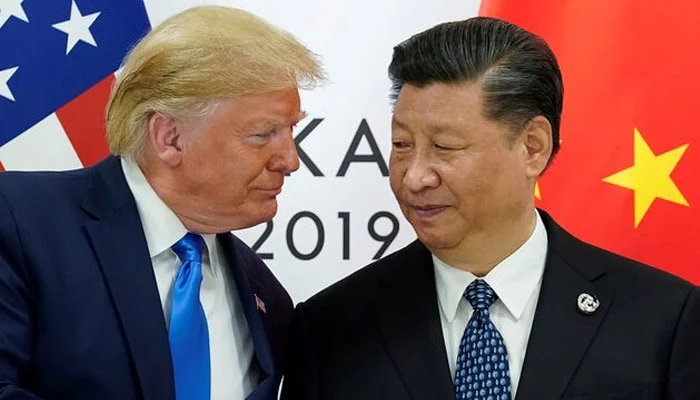
Last week, Trump said he had agreed to reduce tariffs on China to 47% in exchange for Beijing resuming US soybean purchases, keeping rare earths exports flowing, and cracking down on the illicit trade of fentanyl.
His remarks came after face-to-face talks with Xi in the South Korean city of Busan, their first since 2019, marked the finale of Trump’s whirlwind Asia trip on which he also touted trade breakthroughs with South Korea, Japan, and Southeast Asian nations.